The Flat Screen Fatigue and the "Immersion Gap"
You are sitting in your fourth hybrid meeting of the day. A colleague shares their screen, presenting a static, two-dimensional dashboard filled with bar charts and spreadsheets. Eyes glaze over. Microphones are muted. Cameras mysteriously turn off one by one.
We are currently living through a massive gap in immersion.
While corporate workflows remain trapped behind flat monitors and rigid presentation slides, the entertainment and sports broadcasting industries are quietly building the future of spatial, interactive, and hyper-personalized data consumption. They are utilizing tech that is a decade ahead of what we use to view our daily metrics.
Think about it: Major League Baseball is using AI to process millions of spatial data points in real-time. The NFL is tracking the exact millimeter movement of players using RFID tags. Formula 1 is experimenting with tabletop holograms.
Why does this matter to your day-to-day corporate life? Because the transition from directed broadcasts (where you are forced to look exactly where the presenter points the camera) to interactive sandboxes (where the user controls the data, the angle, and the experience) is about to overhaul how we collaborate, train, and make decisions in the enterprise.
Let's break down the foundational technologies driving this immersive revolution, and exactly how you can prepare your organization to leverage them.
1. The Data Foundation: Machine Vision and Wearable Sensors
Before you can build an interactive, 3D experience, you need flawless, real-time data collection. In the sports world, this is achieved through a combination of high-frame-rate computer vision and wearable sensors.
Companies like Sony, through their Hawk-Eye technology, mount perfectly synchronized machine vision cameras around stadiums to track the 3D location of every single player with millimeter accuracy. Meanwhile, the NFL has embedded Radio-Frequency Identification (RFID) tags into players' shoulder pads, the pylons, the chains, and even the football itself. This creates a highly accurate, constantly updating 3D map of the physical world.
The Corporate Application: Spatial Mapping and Asset Tracking
In a corporate setting, flat data is no longer enough to optimize complex physical operations. We are moving toward a reality where the physical and digital seamlessly intersect.
- Scenario: Global Logistics Optimization. Instead of viewing a spreadsheet of inventory levels, supply chain managers can use localized RFID tracking and machine vision to create a live, 3D digital twin of a massive fulfillment center. You can see the precise movement of forklifts, automated guided vehicles (AGVs), and inventory pallets in real-time.
- Scenario: Employee Safety and Ergonomics. Using anonymized computer vision on the manufacturing floor, safety officers can track worker movements. If the system detects repetitive motions that frequently lead to ergonomic injuries, it flags the issue automatically, allowing teams to adjust the assembly line layout before an injury occurs.
Pro Tip: To prepare your organization for spatial data, start evaluating your current IoT (Internet of Things) infrastructure. Are you merely logging data, or are you tracking the spatial context of that data?
2. AI Analytics: Translating Raw Data into Real-Time Insights
Capturing millions of spatial data points is useless if you cannot make sense of them. If you are tracking the X, Y, and Z coordinates of every asset in a facility, the sheer volume of raw data will overwhelm any human analyst.
This is where AI platforms step in. Major League Baseball partnered with Google Cloud to analyze 15 million data points per game in real-time. They process ball trajectories, strike calls, bat speed, and swing length instantaneously, personalizing the viewing experience for the fan and providing actionable insights for the teams.
The Corporate Application: The End of the Monthly Report
If AI can analyze a 100 mph fastball and instantly generate a 3D overlay of its trajectory, why are we still waiting until the end of the month to generate a static sales report?
- Instantaneous Business Intelligence (BI): Modern AI analytics can ingest raw pipeline data, customer interactions, and market shifts, turning them into predictive insights instantly.
- Contextual Dashboards: Instead of looking at a historical chart, an AI-driven dashboard alerts you to anomalies as they happen. If customer churn spikes in a specific region, the AI highlights the exact variables causing it, generating a visual model of the problem before you even have to query the database.
When your team has AI processing the heavy lifting of data synthesis, human capital is freed up to focus entirely on strategic decision-making and creative problem-solving.
3. Surviving the "Headset Tax"
For years, the corporate world tried to force immersion through Virtual Reality (VR) headsets. We were promised virtual boardrooms and immersive remote training. Yet, adoption remains sluggish.
The barrier is what we can call the "Headset Tax."
Even though companies like Meta have sold tens of millions of Quest headsets, daily active usage is relatively low. The friction of putting a heavy piece of hardware on your face, adjusting the straps, isolating yourself from your physical environment, and trying to navigate a clunky interface is simply too high. The slight bump in immersion does not justify the physical discomfort. You cannot comfortably drink your coffee, look at your phone, or take notes while fully blindfolded by VR.
The Corporate Application: Frictionless Mixed Reality
If you are planning an immersive technology rollout for your team, you must respect the headset tax.
- Avoid Mandatory VR Isolation: Do not force employees into fully enclosed VR environments for routine meetings. It causes fatigue and restricts their ability to multitask.
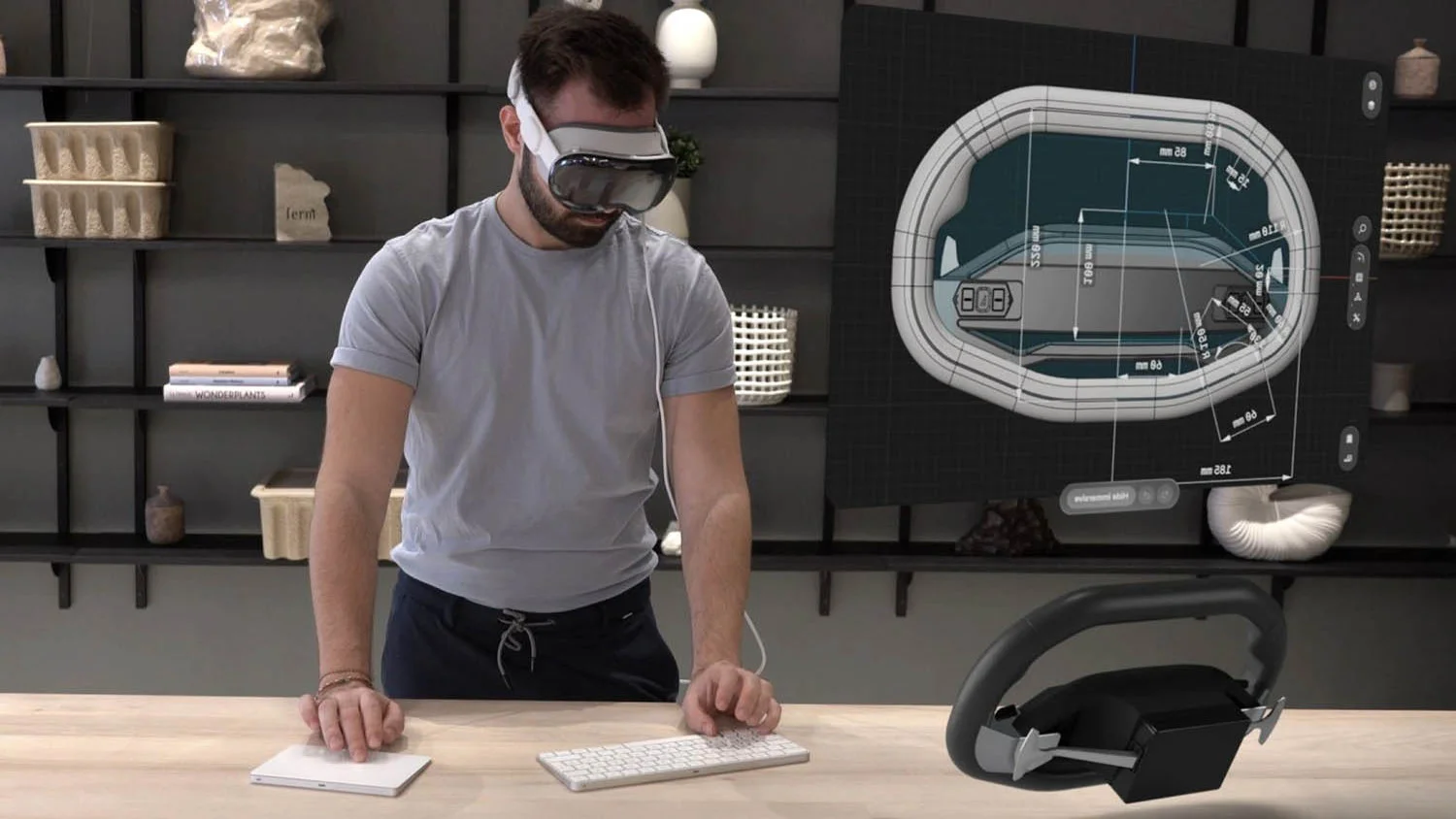
- Pivot to Mixed Reality (MR): Devices that blend the digital and physical worlds (using passthrough cameras) allow employees to see their actual keyboard, their coffee mug, and their physical office while interacting with digital 3D models.
- Focus on High-Value Use Cases: Reserve headset usage for scenarios where immersion is absolutely critical—like high-risk safety training (e.g., simulating a chemical spill) or intricate 3D engineering design reviews.
4. Immersive 3D Rendering and "Impossible Angles"
We are shifting away from capturing video to capturing radiance fields. Using technologies like 3D Gaussian Splatting and platforms like Unreal Engine, companies can take standard 2D camera feeds and reconstruct a photorealistic, fully navigable 3D environment.
Startups are already using this to re-skin live sports data, creating slow-motion, Matrix-style replays from "impossible angles"—like viewing a slam dunk from the perspective of the basketball itself, or pausing a baseball slide to view it from a top-down drone angle, all rendered from cameras that were sitting on the sidelines.
The Corporate Application: The Next Generation B2B Demo
Imagine applying this free-roam 3D rendering to your sales process or product development.
- Scenario: The Spatial Product Launch. You are selling a multi-million dollar, room-sized medical imaging machine to a hospital network. You cannot ship the machine to their office for a demo. Instead of showing them a flat promotional video, you use volumetric capture to create a photorealistic 3D model. During the pitch, the client can use an iPad (or a mixed reality headset) to walk around the machine, peer inside the mechanics, and view it from impossible angles.
- Scenario: Remote Site Inspections. An engineering team in London needs to inspect a damaged oil rig in the North Sea. Instead of flying a team out, local drones capture the site using Gaussian splatting. The London team explores a photorealistic 3D recreation of the rig, examining the damage from any angle, effectively teleporting to the site without leaving their desks.
5. Spatial UI and the Interactive Sandbox
One of the most exciting developments in the Apple Vision Pro ecosystem is the concept of Spatial UI. Consider a recently developed Formula 1 application: instead of just watching a race on a flat screen, the app generates a 3D topographical map of the entire racetrack sitting directly on your physical coffee table. You can watch the 3D cars race around the physical layout of your room, while floating 2D screens above the track show the live broadcast and real-time driver statistics.
This shifts the dynamic from a directed broadcast to an interactive sandbox. The user becomes their own director, pinning the information they care about in their physical space.
The Corporate Application: The Spatial Command Center
The interactive sandbox is the future of complex corporate project management.
- Scenario: The Interactive War Room. You are managing a massive software migration across a global enterprise. Instead of a linear slide deck, you project a spatial map of your global offices onto the boardroom table. You can physically point to the London node to expand their deployment metrics. You can pin a live video feed of the lead engineer on the wall, while a floating dashboard displays server health.
- Scenario: Democratized Data Review. When presenting quarterly earnings to your department, you provide a spatial link. Each employee can open the sandbox on their device, zooming in on the specific metrics that matter to their role (e.g., the marketing team isolates the campaign ROI data, while the sales team rotates the model to view regional pipeline growth). Everyone is in the same "presentation," but controlling their own contextual view.
6. The Social Immersive Experience (The Cosm Model)
While headsets offer incredible personal immersion, humans are inherently social creatures. The most commercially successful immersive experiences right now do not require headsets at all.
Look at Cosm venues—massive, 8K wrap-around LED domes that resemble a mini Madison Square Garden Sphere. People are paying $600 a ticket to sit with their friends, drink a beer, and watch a UFC fight or an NBA game projected on a screen so massive and sharp that it feels like they are sitting courtside. It is shared, frictionless immersion.
The Corporate Application: Hybrid Town Halls and Briefing Centers
The corporate world desperately needs to solve the isolation of remote and hybrid work without forcing people into isolating VR headsets.
- The Executive Briefing Center 2.0: Forward-thinking organizations are building immersive rooms equipped with wrap-around, high-definition LED walls and spatial audio. When pitching to a major client, the walls transform into the client's future storefront, or a 360-degree data visualization of their market share. It is a shared, deeply impressive physical experience that requires no onboarding or hardware for the client.
- The Hybrid Town Hall: Instead of having 500 employees staring at a grid of tiny boxes on Microsoft Teams, regional offices can gather in socially immersive rooms. High-fidelity, wide-angle camera setups and massive screens can make it feel like the global workforce is sitting in the exact same auditorium.
Pro Tip: Immersion does not always mean VR. Sometimes, immersion is simply about removing the bezel of the monitor and creating a shared physical environment enhanced by digital context.
Building Your Organization's Spatial Future
The gap between how we consume entertainment and how we consume corporate data is closing rapidly. The tools to build a highly engaging, interactive, and spatial workflow are no longer confined to R&D labs; they are actively being deployed in stadiums, race tracks, and living rooms.
To thrive in this next era, corporate leaders must shift their mindset. Stop thinking about data as something you print on a page or display on a flat slide. Start viewing data as an environment you can step into, interact with, and manipulate.
Whether it is leveraging AI to turn raw metrics into real-time 3D insights, utilizing Gaussian splatting to pitch your next big product, or building a spatial command center for your next project, the technology is ready.
The directed broadcast is dead. The era of the interactive corporate sandbox has arrived.
What are your thoughts on the "Headset Tax"? Do you believe mixed reality glasses or shared immersive rooms (like LED domes) will ultimately win the battle for corporate collaboration? Drop your predictions in the comments below!